
Blocked Fallopian Tubes and Fertility in Singapore
Blocked Fallopian Tubes can affect how the egg and sperm meet, which may make conception more difficult.
Some individuals in Singapore may only become aware of this condition when they are trying to conceive or undergoing a fertility assessment. Understanding how fallopian tube blockage affects fertility can help you decide when to seek advice.
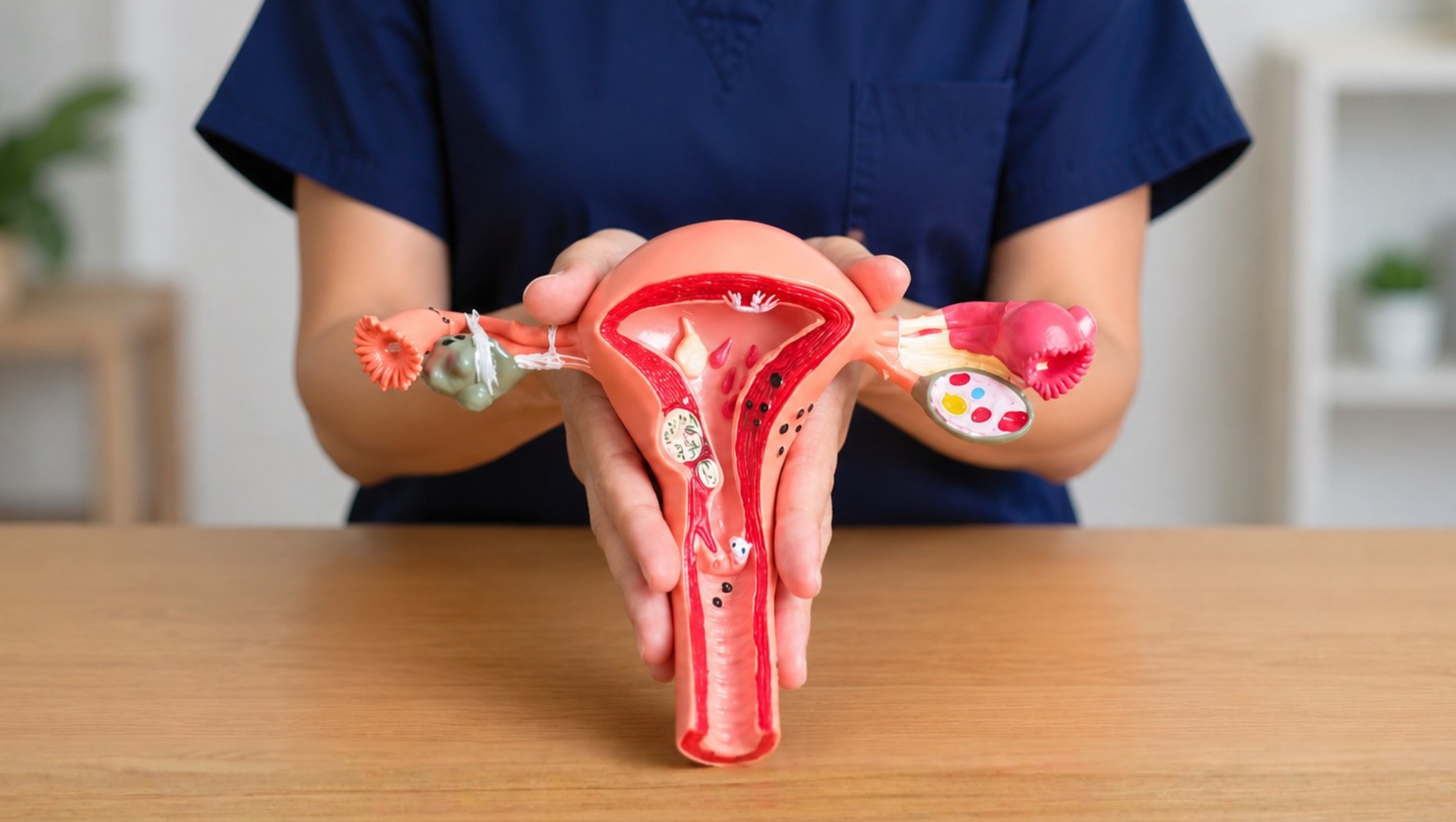
What are Fallopian Tubes
and why they matter
Fallopian Tubes connect the ovaries to the uterus. They play an important role in natural conception.
After ovulation, the egg travels through the fallopian tube. Fertilisation typically takes place here before the embryo moves into the uterus.
If one or both tubes are blocked, this process may be disrupted.
How Blocked Fallopian Tubes
may affect fertility
When the fallopian tubes are blocked:
- The egg may not be able to travel to the uterus
- Sperm may not be able to reach the egg
- Fertilisation may not occur naturally
In some cases, only one tube is affected. In others, both tubes may be blocked.
While this may make natural conception more challenging, different treatment options may be considered depending on your situation.
What can cause Blocked
Fallopian Tubes
Blockages may be linked to:
In some cases, there may not be a clear cause identified.

Are there symptoms?
Blocked Fallopian Tubes do not always cause noticeable symptoms.
Some individuals may experience:
- Pelvic pain
- Pain during menstruation
- A history of infection or inflammation
However, many people only discover a blockage during a fertility assessment.
How Blocked Fallopian Tubes are assessed
A common way to assess the Fallopian Tubes is through a test called Hysterosalpingogram (HSG).
This involves placing a contrast dye into the uterus and using imaging to see whether the fallopian tubes are open.
In some cases, additional imaging or procedures may be recommended.
A structured Fertility Assessment in Singapore can help provide a clearer understanding of your reproductive health.


What are the possible next steps
Next steps depend on the location and extent of the blockage, as well as your overall fertility profile.
This may include:
- Monitoring or further evaluation
- Surgical management in selected cases
- Fertility treatment options such as IVF, where appropriate
If both Fallopian Tubes are Blocked, IVF may be considered, as it bypasses the fallopian tubes.
Your doctor will guide you based on what may be suitable for your situation.

Endometriosis care at GenPrime Fertility Singapore
At GenPrime Fertility Singapore, care is guided by your individual situation and may include:
- Ultrasound assessment
- Review of medical and reproductive history
- Hormone testing where appropriate
Based on your results, your doctor will guide you on what may be appropriate next steps, which may include monitoring, symptom management, or fertility treatment options.
Common questions about Endometriosis and Fertility
Pregnancy may still be possible, depending on whether one or both tubes are affected. Your doctor will guide you based on your situation.
In some cases, treatment or surgery may be considered. In others, fertility treatment such as IVF may be discussed.
A test such as an HSG is commonly used to check whether the fallopian tubes are open.
Some individuals may experience mild discomfort during the procedure. Your doctor will guide you on what to expect.
Not always. This depends on whether one or both tubes are affected and your overall fertility profile.
Treatment suitability and outcomes vary between individuals.